
How Much Does It Cost to Develop a Mobile App in India in 2026?
Mobile apps have become an essential part of how businesses connect with customers, manage operations, and provide digital services. From eCommerce and healthcare to fitness, education, transport, and finance, businesses across industries are investing in mobile applications to improve accessibility and customer experience.
If you are planning to build a mobile app in 2026, understanding what affects the overall development effort is important before starting your project.
Rather than focusing only on price, businesses should consider the features, platform, technology, design quality, security requirements, integrations, and long-term scalability of the application.
What Determines Mobile App Development Cost?
Every mobile application is different. A simple business application requires a very different development process compared with a social networking platform, fitness application, healthcare solution, or AI-powered mobile app.
Several factors influence the overall scope of mobile app development.
1. App Complexity
The complexity of the application is one of the biggest factors.
A basic app may include features such as:
-
User registration and login
-
User profiles
-
Contact forms
-
Basic dashboards
-
Push notifications
-
Simple content management
More advanced applications may require:
-
Real-time chat
-
Video or audio calling
-
GPS and location tracking
-
Online payments
-
Social login
-
AI-powered recommendations
-
Fitness or health integrations
-
Advanced analytics
-
Multiple user roles
-
Admin dashboards
-
Cloud storage
-
Third-party API integrations
As the number of features increases, the development, testing, security, and maintenance requirements also increase.
2. Android, iOS, or Both Platforms
Businesses need to decide whether they want to launch their application for Android, iOS, or both.
There are generally two development approaches.
Native App Development
Native applications are developed separately for each operating system.
For example:
-
Swift is commonly used for iOS development.
-
Kotlin or Java is commonly used for Android development.
Native development provides strong performance and access to platform-specific capabilities.
Cross-Platform App Development
Cross-platform technologies allow developers to create applications for Android and iOS using a shared codebase.
Popular technologies include:
-
Flutter
-
React Native
Cross-platform development can simplify development and maintenance when the same application needs to run on multiple platforms.
3. UI/UX Design
A mobile application should not only work properly but should also be easy and comfortable to use.
Professional UI/UX design includes:
-
User journey planning
-
Wireframes
-
Mobile screen designs
-
Navigation structure
-
Typography
-
Brand colors
-
Buttons and interactions
-
Responsive layouts
-
Accessibility considerations
Applications with custom animations, advanced interactions, or highly personalized interfaces require additional design and development work.
4. Backend Development
Many mobile applications require a backend system to manage data and communicate with the application.
A backend may handle:
-
User accounts
-
Authentication
-
Application data
-
Payments
-
Notifications
-
User permissions
-
File uploads
-
Analytics
-
Business logic
Technologies such as Laravel, Node.js, Express.js, PHP, MySQL, MongoDB, and cloud platforms are commonly used for backend development.
A secure and scalable backend is especially important for applications expected to support a large number of users.
5. Admin Dashboard
Many business applications also require an administrative dashboard.
An admin panel allows businesses to manage the application without modifying the mobile app directly.
Depending on the application, administrators may be able to manage:
-
Users
-
Trainers
-
Customers
-
Products
-
Orders
-
Services
-
Payments
-
Reports
-
Notifications
-
Content
-
App settings
A powerful admin dashboard makes it easier to manage operations as the application grows.
6. Third-Party API Integrations
Modern applications often connect with external platforms.
Common integrations include:
-
Google Maps
-
Google Sign-In
-
Apple Sign-In
-
Payment gateways
-
Firebase
-
AWS services
-
SMS services
-
Email services
-
Social media platforms
-
HealthKit
-
Google Fit or Health Connect
-
AI APIs
Every integration requires implementation, configuration, testing, and sometimes additional security measures.
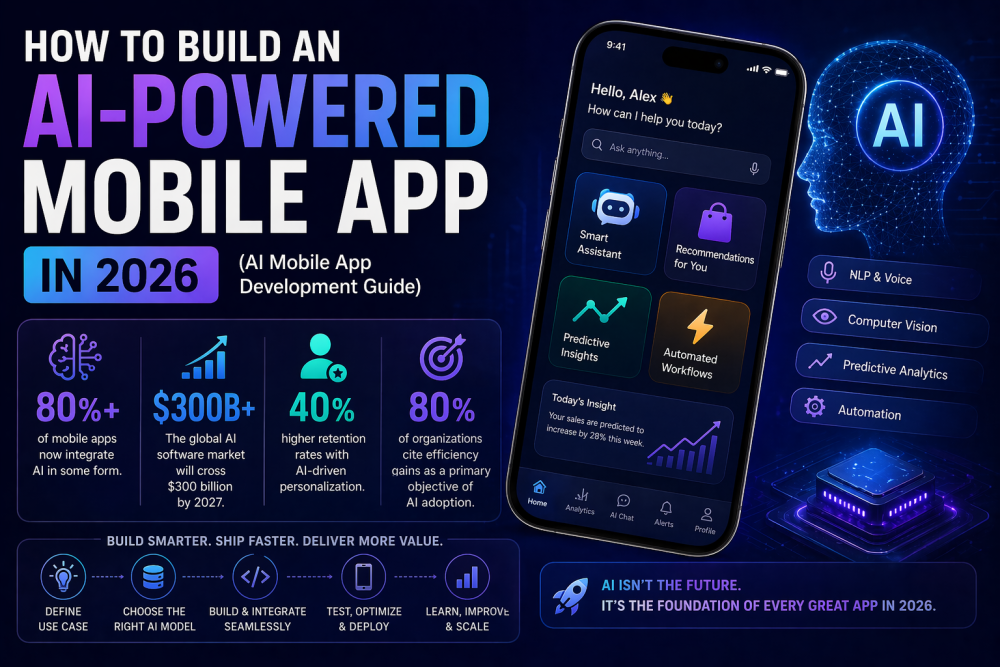
7. AI Features
Artificial intelligence is becoming increasingly common in mobile applications.
AI-powered applications may include:
-
AI chat assistants
-
Personalized recommendations
-
Image recognition
-
Voice assistants
-
Predictive analytics
-
Automated customer support
-
Fitness recommendations
-
Smart search
-
Content generation
Adding AI functionality usually requires both application development and backend integration with AI models or services.
8. Security
Security should be considered from the beginning of mobile app development.
Important security features may include:
-
Secure authentication
-
Password encryption
-
API authentication
-
Role-based permissions
-
Secure cloud storage
-
Data encryption
-
Token-based authentication
-
Secure payment processing
Applications that handle financial, healthcare, or personal information often require stricter security practices.
9. Testing and Quality Assurance
Before publishing an application, developers need to test it across different devices and operating system versions.
Testing may include:
-
Functional testing
-
UI testing
-
API testing
-
Performance testing
-
Security testing
-
Device compatibility testing
-
Network testing
-
User acceptance testing
Proper testing helps identify bugs before users encounter them.
10. App Store Deployment
After development and testing, the application needs to be prepared for publishing.
For Android applications, deployment usually involves Google Play.
For iOS applications, deployment usually involves the Apple App Store.
The process includes:
-
Preparing application builds
-
Creating store listings
-
Adding screenshots
-
Writing app descriptions
-
Configuring privacy information
-
Reviewing platform guidelines
-
Submitting the app for approval
Developers may also need to address issues identified during the review process.
Popular Mobile App Types in 2026
Businesses are developing mobile applications across many industries.
Some popular categories include:
Healthcare Apps
Healthcare applications may include appointment booking, telemedicine, prescription management, patient dashboards, fitness tracking, or medical record integrations.
Fitness Apps
Fitness applications may include:
-
Workout plans
-
Trainer profiles
-
Exercise videos
-
Progress tracking
-
Apple Health integration
-
Nutrition plans
-
AI fitness recommendations
eCommerce Apps
eCommerce applications often include:
-
Product catalogs
-
Shopping carts
-
Online payments
-
Order tracking
-
Wishlist functionality
-
Product recommendations
-
Push notifications
Education Apps
Education applications may provide:
-
Online courses
-
Video lessons
-
Student dashboards
-
Assessments
-
Teacher management
-
Progress tracking
-
Live classes
Transportation Apps
Transportation applications may include:
-
GPS tracking
-
Route planning
-
Driver dashboards
-
Booking systems
-
Real-time vehicle locations
-
Digital payments
Social Networking Apps
Social platforms may include:
-
User profiles
-
Friend requests
-
Messaging
-
Audio/video calls
-
Content sharing
-
Notifications
-
Online status
These applications usually require real-time technologies and scalable backend systems.
Choosing the Right Technology for Your Mobile App
Selecting the correct technology depends on your project's requirements.
Some commonly used technologies include:
Mobile Development
-
React Native
-
Flutter
-
Swift
-
Kotlin
Backend Development
-
Laravel
-
Node.js
-
Express.js
-
PHP
Databases
-
MySQL
-
MongoDB
-
PostgreSQL
Frontend and Admin Dashboards
-
React.js
-
Next.js
-
HTML5
-
CSS3
-
JavaScript
-
TypeScript
Cloud Services
-
AWS
-
Firebase
-
Google Cloud
The right technology stack should support both current requirements and future growth.
Why Businesses Choose India for Mobile App Development
India has become one of the major destinations for software and mobile application development.
Businesses choose Indian development companies because of several advantages.
Experienced Development Teams
Indian software companies work with modern technologies including mobile development, cloud infrastructure, AI, web development, API development, and DevOps.
Large Technology Talent Pool
India has a large number of developers specializing in technologies such as React Native, Flutter, Laravel, Node.js, React.js, Swift, Kotlin, and cloud platforms.
Full-Cycle Development
Many development companies provide complete product development services, including:
-
Requirement analysis
-
UI/UX design
-
Mobile development
-
Backend development
-
API development
-
Testing
-
Deployment
-
Maintenance
This allows businesses to work with one development team throughout the entire product lifecycle.
How to Prepare Before Developing a Mobile App
Before approaching a development company, businesses should clearly define their requirements.
Prepare information such as:
-
Target audience
-
Main purpose of the application
-
Required features
-
User roles
-
Target platforms
-
Design preferences
-
Required integrations
-
Competitor applications
-
Future expansion plans
A clear project requirement document helps developers understand the application and recommend an appropriate technical solution.
Should You Build an MVP First?
For many startups and new digital products, developing a Minimum Viable Product can be a practical approach.
An MVP includes the most important features required to test the product idea.
For example, a fitness application MVP might initially include:
-
User registration
-
Profile management
-
Trainer discovery
-
Workout plans
-
Progress tracking
Additional features such as AI recommendations, advanced analytics, wearable integrations, and community functionality can be introduced later.
This approach allows businesses to collect user feedback before expanding the application.
Mobile App Development Trends in 2026
Mobile technology continues to evolve quickly.
Some important trends include:
-
Artificial intelligence integration
-
Personalized user experiences
-
Wearable device integration
-
Voice-enabled applications
-
Cloud-based mobile applications
-
Cross-platform development
-
Real-time communication
-
Advanced mobile security
-
Augmented reality
-
Data-driven personalization
Businesses planning mobile applications should consider how these technologies could improve their product while avoiding unnecessary complexity.
Final Thoughts
Developing a successful mobile application in 2026 requires more than simply writing code.
Businesses need to consider user experience, application architecture, backend infrastructure, security, scalability, integrations, testing, deployment, and long-term maintenance.
The final scope of a mobile application depends heavily on its features, technology, platform, design requirements, and business goals.
Working with an experienced mobile app development team can help transform an idea into a secure, scalable, and user-friendly digital product that supports long-term business growth.